
On September 20 at LZU’s Mingdao Building, the “Symposium on Translating Chinese Literature in the Digital Age” brought together scholars to explore innovation. Organized by the SFLL research team and supported by a youth talent project. The event featured keynotes by Prof. Xu Duo (Nanjing Normal University), Prof. Gao Bin (Yangzhou University), and Associate Prof. He Min (Lanzhou University), with Prof. Luo Na moderating the symposium.
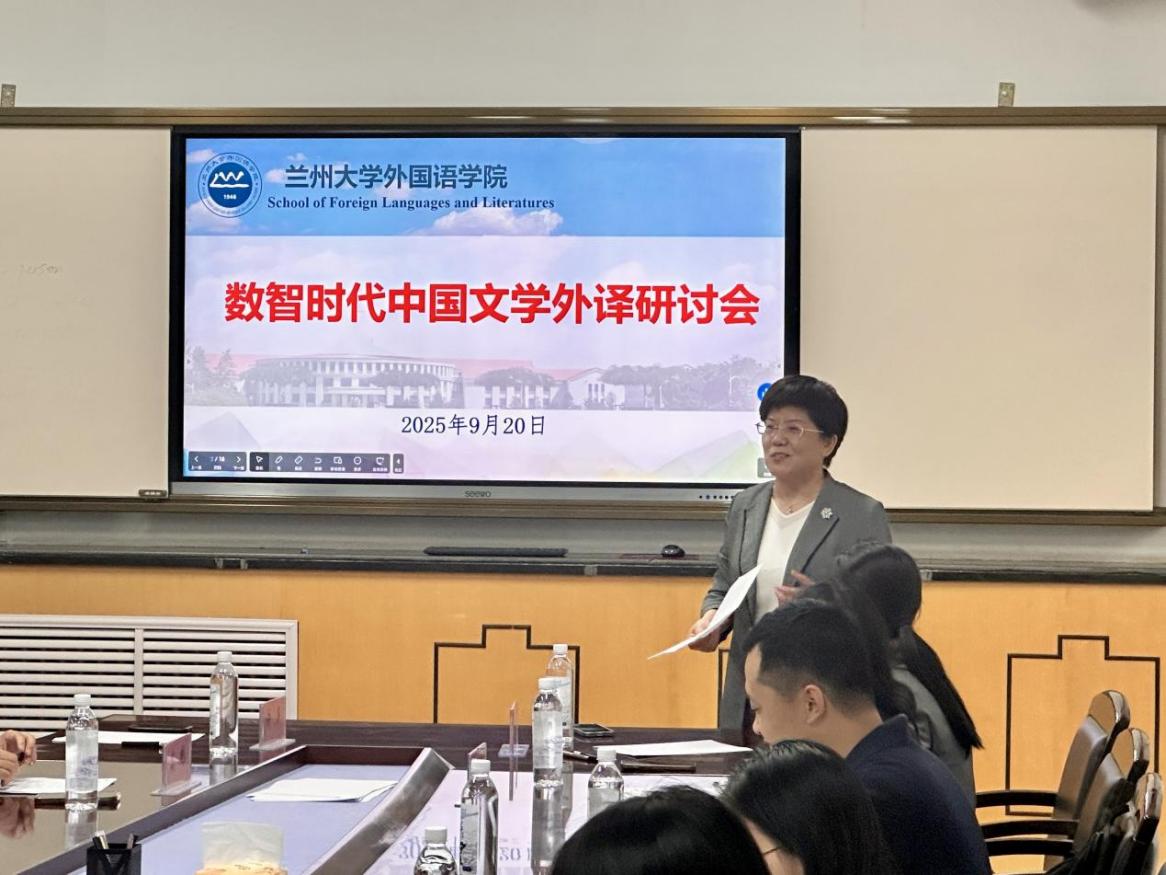
Zhang Hongli,Vice Dean of the School, began by welcoming attendees, highlighting the school’s translation research breakthroughs and commitment to national strategies. She urged the faculty to amplify Chinese literature’s global reach through scholarly contributions.
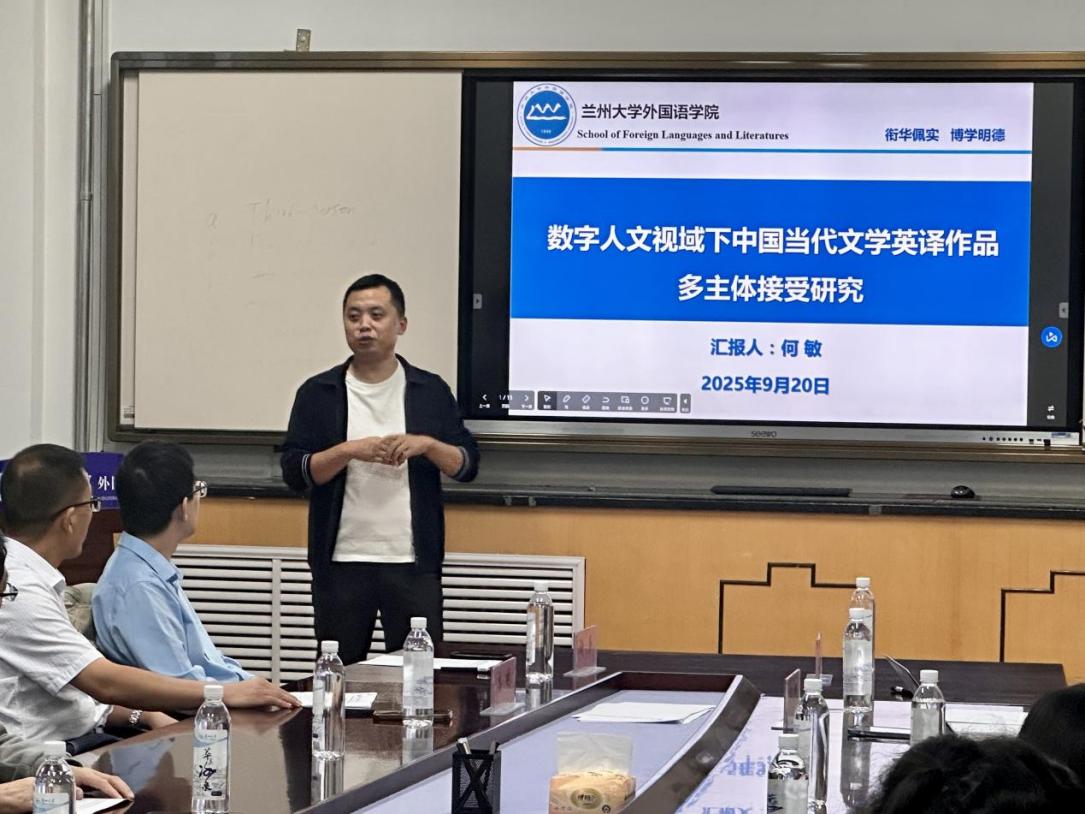
First Session: He Min introduced his project on “Multi-Subject Reception on the English Translation of Chinese Contemporary Literature in Digital Humanities,” highlighting gaps in tech integration and limited focus beyond general readers. The project aims to expand research scope by analyzing interactions among diverse audiences. Experts offered targeted feedback to the project.
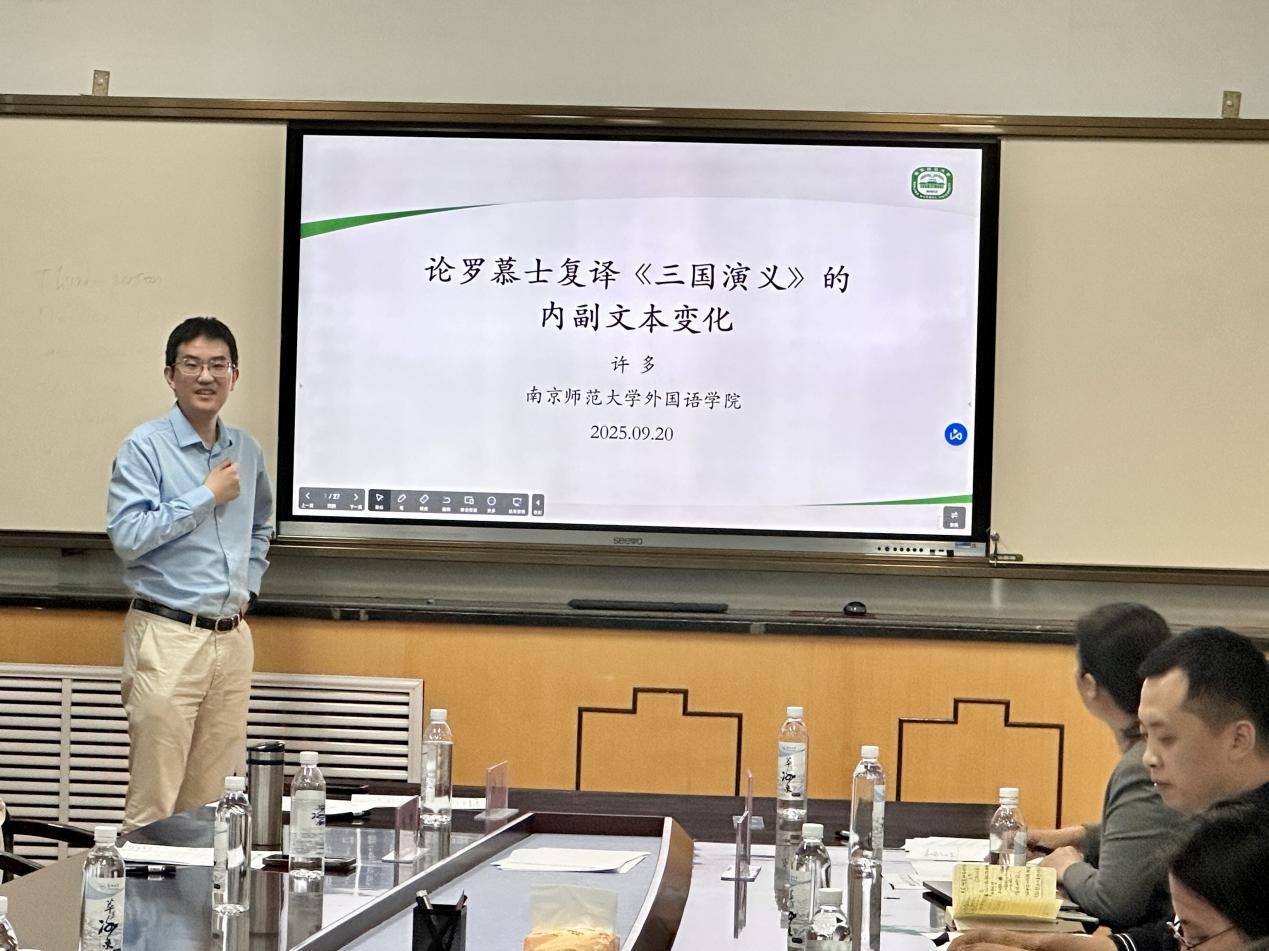
Second Session: two experts delivered two scholarly presentations. Xu analyzed “Paratextual Changes in Moss Roberts’ Retranslation of Romance of the Three Kingdoms,” dissecting Moss’ sustained translation efforts. He argued that translations are not static endpoints but dynamic responses to original works within specific historical contexts. Retranslation, he stressed, goes beyond revising existing versions—it actively renews literary classics by fostering their continuous evolution and vitality in foreign cultures.
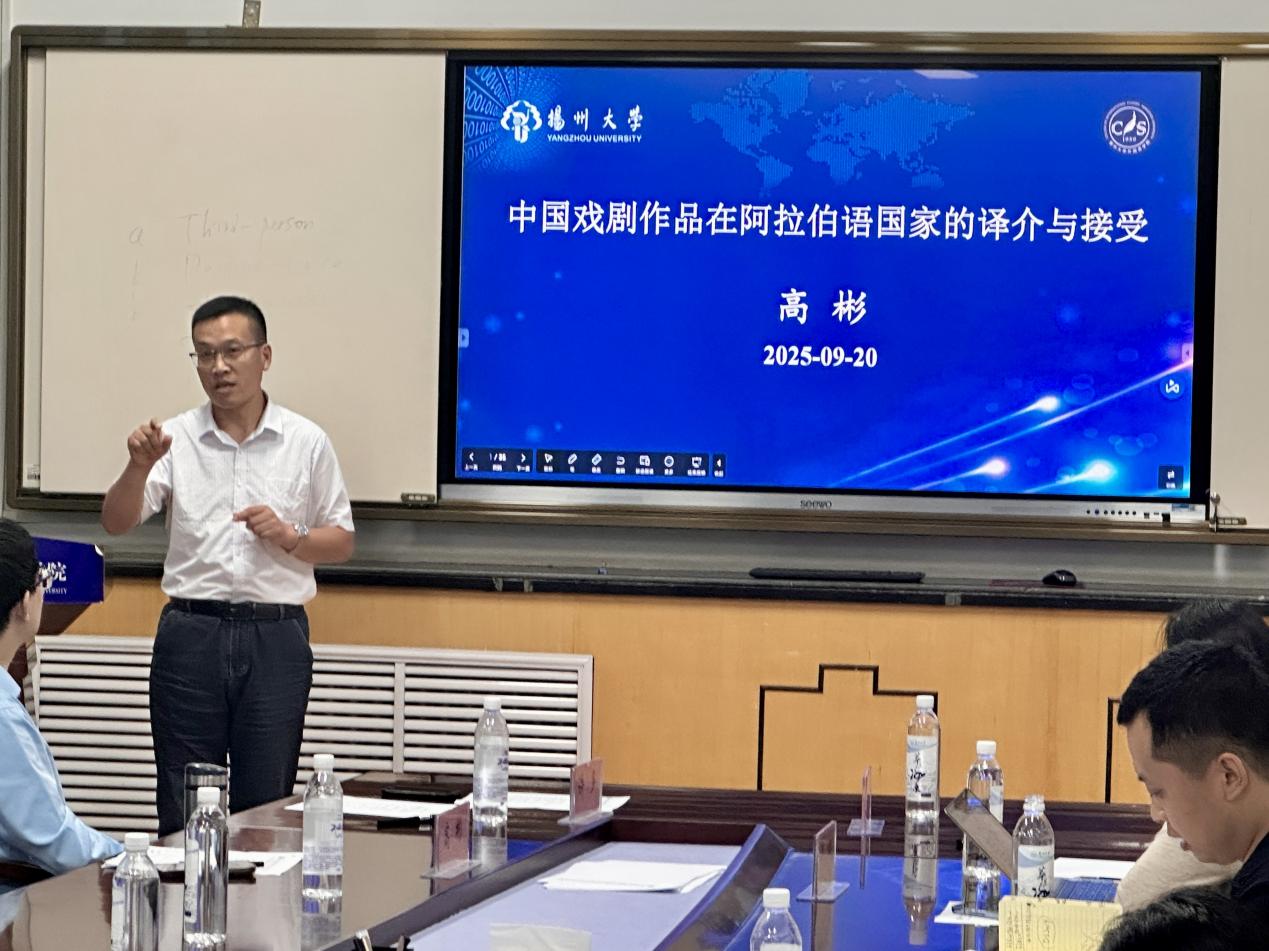
Gao presented “Translating and Receiving Chinese Drama in Arabic-Speaking Countries,” tracing the history of translating Chinese Dramas in Arabic-speaking countries. He highlighted a pivotal shift: from state-initiated “active outward translation” to organic “active inward translation” by Arabic communities—a clear marker of Chinese literature’s deepening global integration. The report noted Chinese drama’s broad acclaim across writers, sinologist translators, and academics in the Arab world.
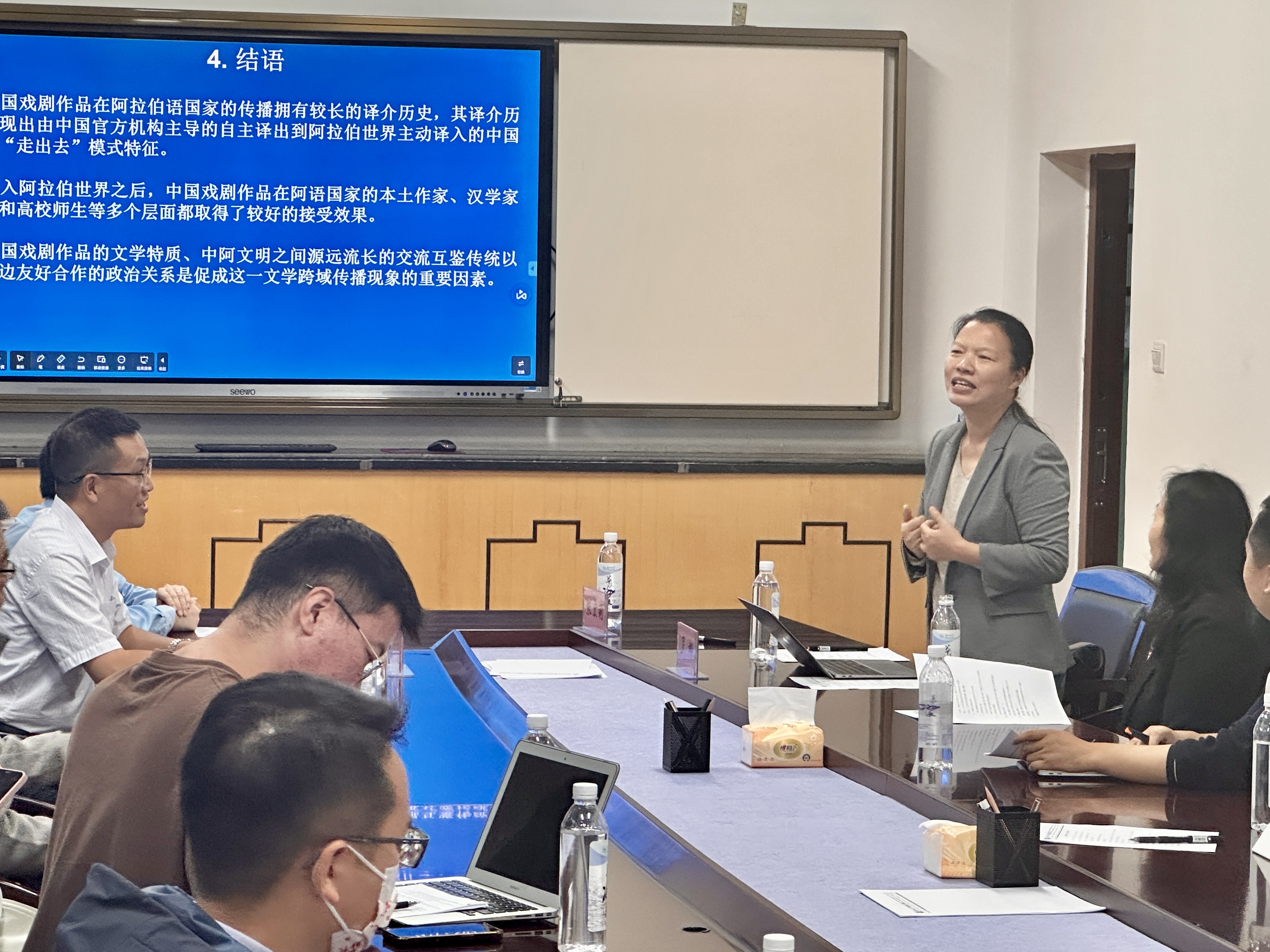
Professor Luo Na fully acknowledged the fruitful outcomes of the conference in her concluding remarks and sincerely thanked the invited guests for their insightful and inspiring contributions.
Add: School of Foreign Languages and Literatures, Lanzhou University,
West Donggang Road, 199, Lanzhou, Gansu, P. R. China, 730000
Tel: 0931-8912270
E-mail: shitr@lzu.edu.cn
Fax: 0931-8912270

Copyright: School of Foreign Languages and Literatures, Lanzhou University
Address: School of Foreign Languages and Literatures, Lanzhou University, South Tianshui Road, 222, Lanzhou, Gansu, P. R. China, 730000