
On December 6, the research team on “Modern Sino-Japanese Linguistic and Cultural Interactions” from the School of Foreign Languages and Literatures successfully held the symposium titled “Modern Sino-Japanese Language Contact from a Regional and Country-Specific Perspective” at Mingdao Building on Lanzhou University’s Chengguan East Campus. The event was organized under the 2025 Qingmiao Project of Lanzhou University, based on the research program “Modern Sino-Japanese Language Contact from a Regional and Country-Specific Perspective”. Professors Wang Xin from Zhejiang Yuexiu University of Foreign Languages, Zhang Xing from Sun Yat-sen University, and Mao Wenwei from the School of Japanese Studies at Shanghai International Studies University were invited as commentators and keynote speakers. Associate Professor Chen Biao, Director of the Japanese Department, served as the project presenter. More than 40 faculty members and students attended the symposium, which was chaired by Associate Professor Fan Yaqiu, Deputy Director of the Japanese Department.
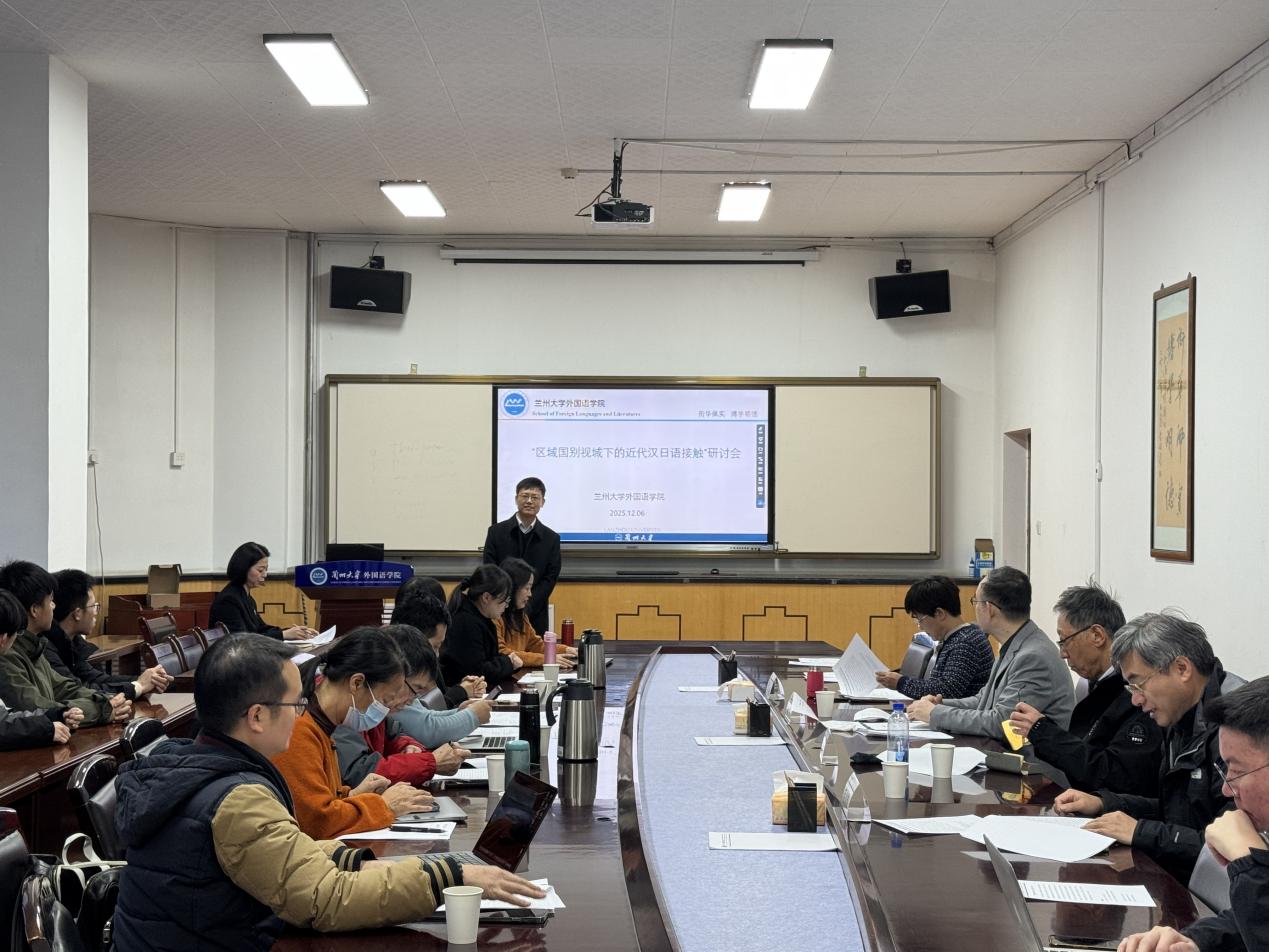
At the opening ceremony, Zhang Hongli, Vice Dean Dean of the SFLL, expressed her gratitude to all attending experts and highlighted the significance of advancing language contact studies from a regional and country-specific perspective in promoting civilizational dialogue and meeting national strategic needs.
The first session featured a project presentation by Associate Professor Chen Biao, who introduced the background, design, and objectives of the research program. He noted that modern Sino-Japanese language contact remains an area requiring deeper exploration, and that situating language contact phenomena within the broader context of social transformation in modern East Asia is a key direction for future research. He also emphasized the importance of examining the interactions between northwest China and Japan since the modern period. The invited experts affirmed the academic value of the project and provided constructive suggestions on theoretical approaches, methodological innovation, research tools, and the development of concrete research pathways.
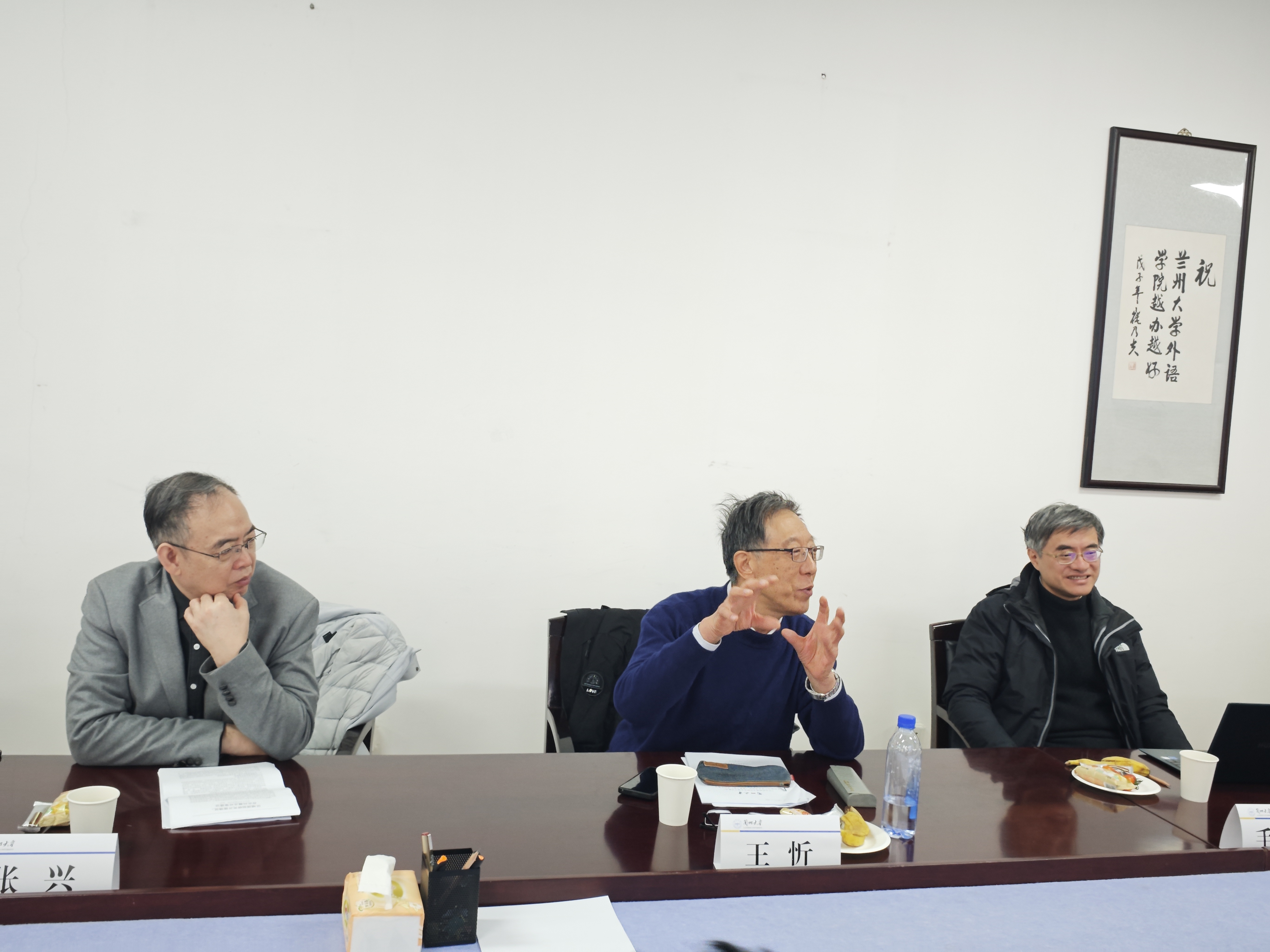
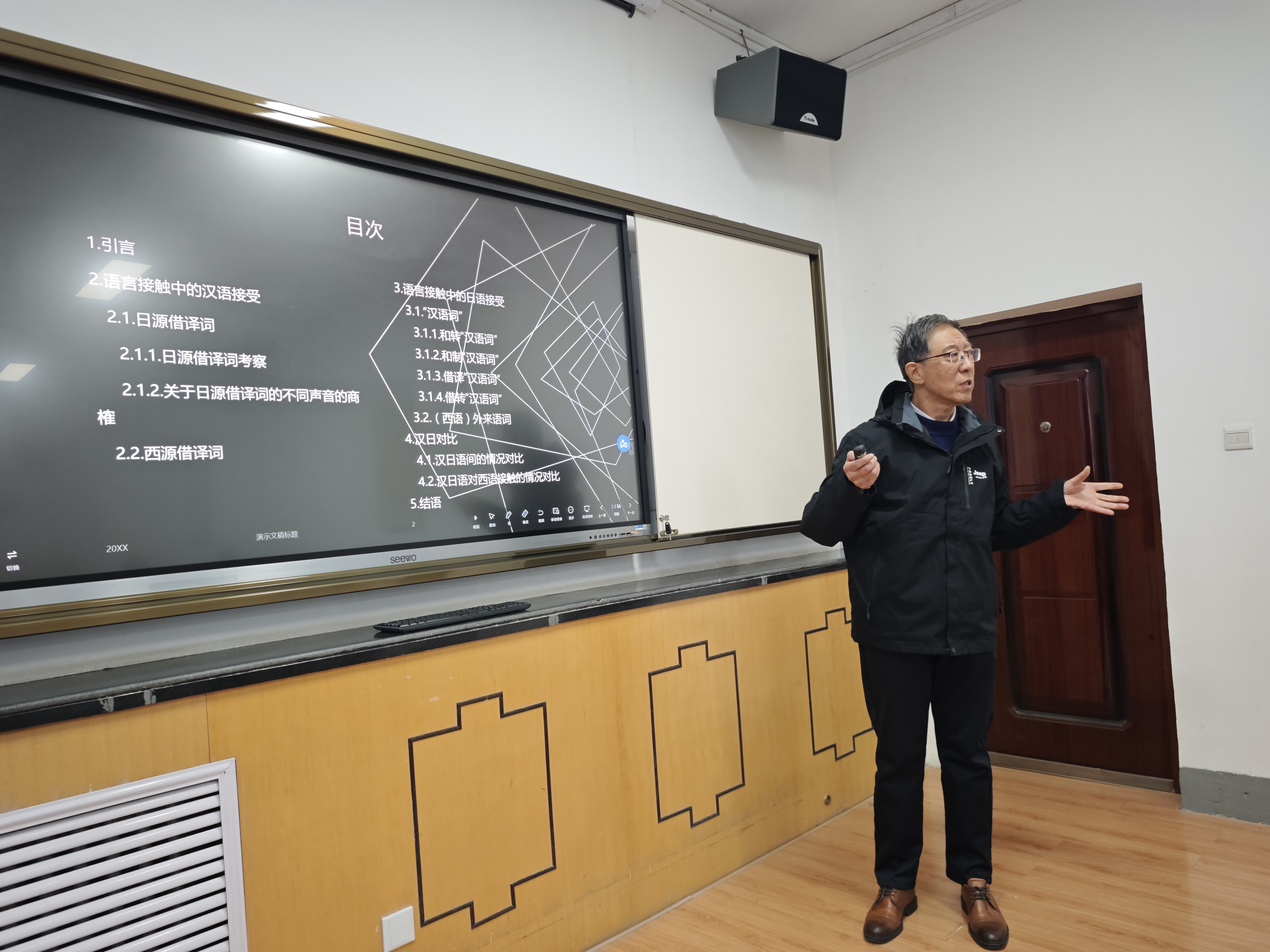
The second session included three academic reports by the visiting experts. Professor Wang Xin delivered a lecture titled “Sino-Japanese Comparison: Lexicalization under Language Contact”. He provided a clear overview of the distinct paths and patterns of lexicalization that emerged as Chinese and Japanese borrowed from each other and encountered Western languages. He also analyzed different types of Sino-Japanese lexical exchange and compared the contrasting strategies of semantic adaptation in Chinese and phonetic borrowing in Japanese when adopting Western loanwords.
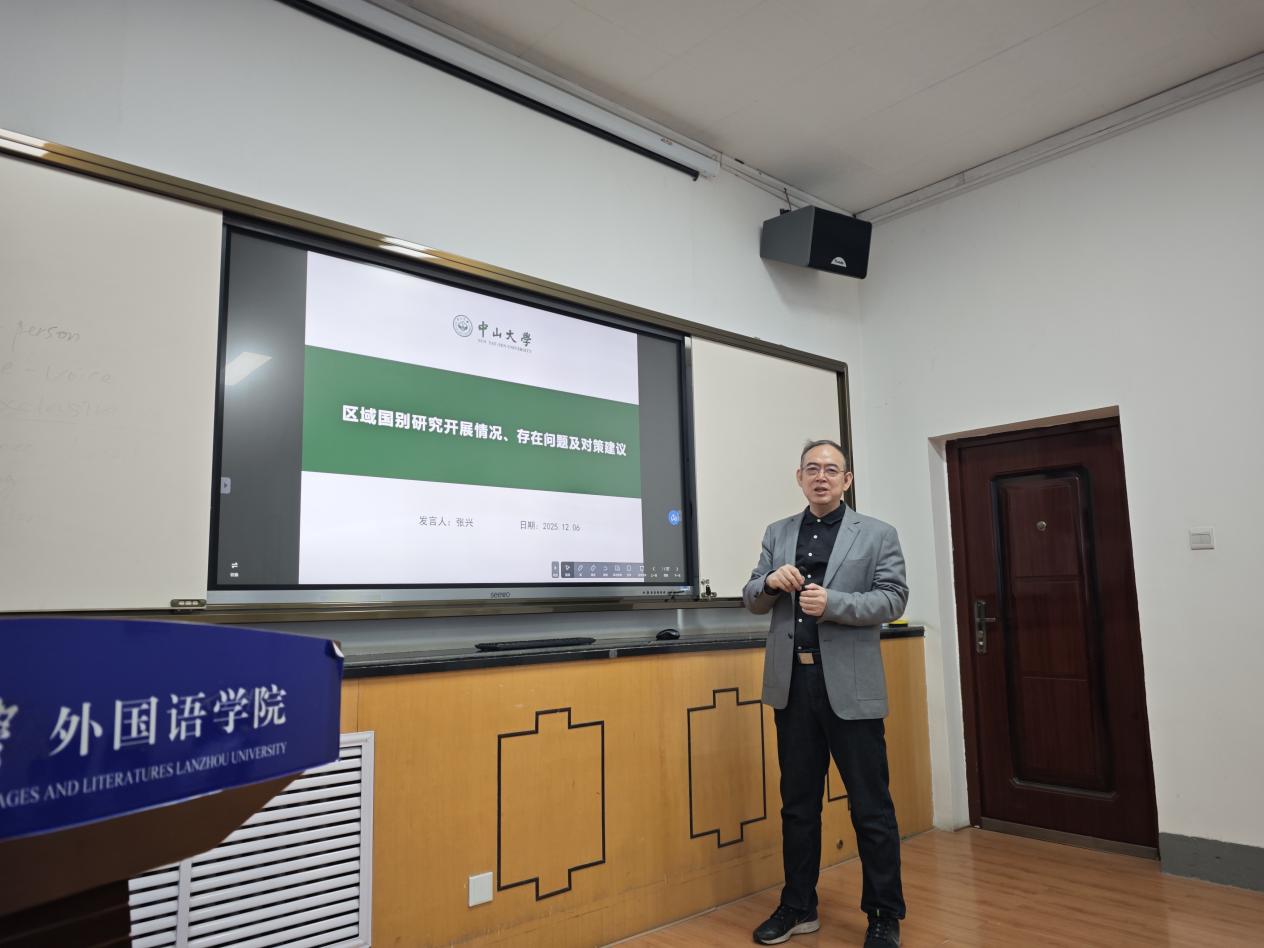
Professor Zhang Xing presented a report titled “Current Developments, Challenges, and Policy Recommendations in Regional and Country Studies”. He systematically reviewed the development and achievements of regional and country studies in China, examined issues related to disciplinary positioning, talent cultivation, the application and transformation of research outputs, resource allocation, and international discourse power, and proposed a series of strategies to advance high-quality development in this field.
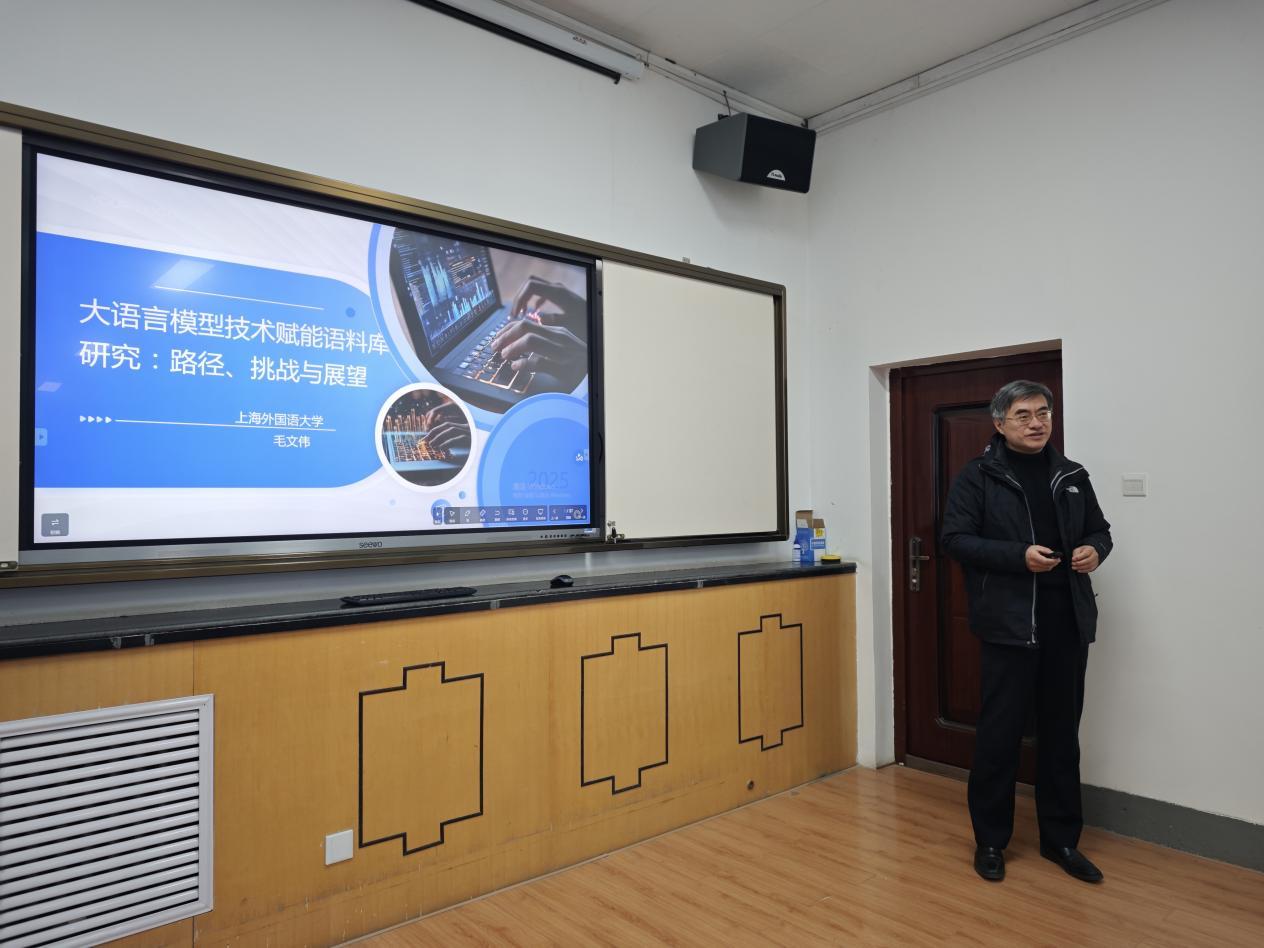
Professor Mao Wenwei’s talk, “Empowering Corpus Research with Large Language Models: Paths, Challenges, and Future Prospects”, focused on the practical application of large language models in Japanese corpus construction. He compared the performance of various models in text summarization, corpus annotation, and quantitative analysis, while emphasizing the indispensable role of human intervention in corpus development.
In her concluding remarks, Associate Professor Fan Yaqiu stressed that the symposium was both rich in content and diverse in perspective, integrating macro-level theoretical reflection with micro-level empirical analysis. The combination of the project presentation and expert reports demonstrated the breadth and depth of language contact research within a regional and country-specific framework. She emphasized that the symposium not only provided valuable guidance to the research team but also created a high-level platform for scholarly exchange, which will strongly promote innovative research on modern Sino-Japanese language contact and broader regional linguistic and cultural studies.

Add: School of Foreign Languages and Literatures, Lanzhou University,
West Donggang Road, 199, Lanzhou, Gansu, P. R. China, 730000
Tel: 0931-8912270
E-mail: shitr@lzu.edu.cn
Fax: 0931-8912270

Copyright: School of Foreign Languages and Literatures, Lanzhou University
Address: School of Foreign Languages and Literatures, Lanzhou University, South Tianshui Road, 222, Lanzhou, Gansu, P. R. China, 730000